
Epoxy Flooring

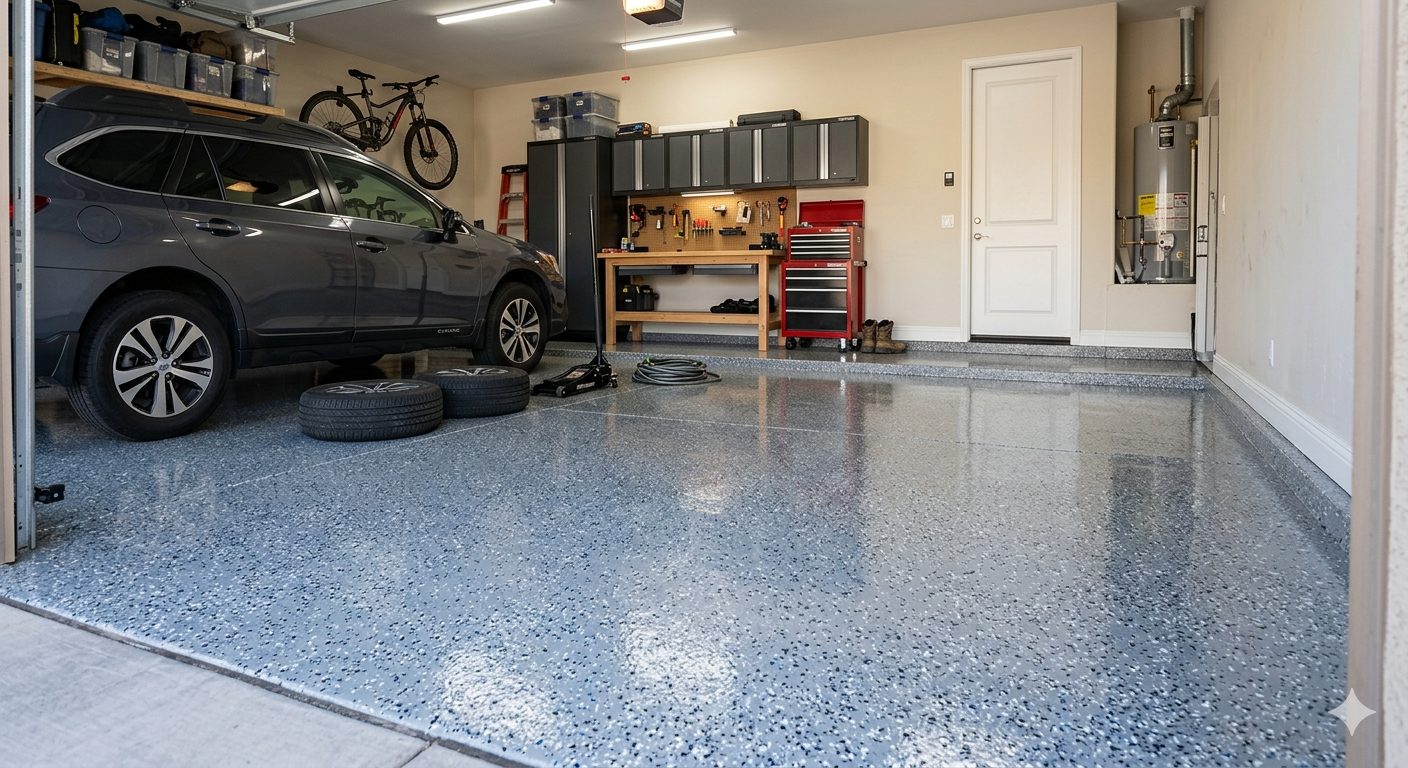
Garage Floors Designed for Equipment and Spills
Epoxy flooring in Marietta for garages and workshops requiring stain-resistant and easy-to-clean surfaces
Concrete garage floors absorb oil, coolant, and other automotive fluids, leaving permanent stains that spread across porous surfaces and cannot be removed through pressure washing alone. Leon Home Renovation applies epoxy coatings that seal concrete and create a smooth, non-porous surface resistant to chemical penetration and tire marks. You need flooring that maintains its appearance despite regular vehicle traffic, tool storage, and fluid exposure from routine maintenance work.
Epoxy systems bond to concrete through a chemical reaction that occurs after mixing resin and hardener components, which creates a durable layer once curing completes. Surface preparation involves grinding or acid etching concrete to open pores and remove contaminants that prevent adhesion. Proper preparation directly affects how long the epoxy remains bonded to the slab without peeling or bubbling at edges and high-traffic zones.
Arrange an on-site evaluation to assess concrete condition and discuss coating options suited to your garage use in Marietta, Alpharetta, Woodstock, and surrounding areas.

How Epoxy Addresses Concrete Porosity
Concrete naturally contains microscopic pores that absorb liquids on contact, which is why untreated garage floors develop dark stains where vehicles park or tools are stored. Epoxy fills these pores and forms a sealed barrier that liquids cannot penetrate, allowing spills to be wiped away before staining occurs. The coating thickness and number of layers applied determine durability under heavy use and resistance to abrasion from turning tires or dragged equipment.
Once the epoxy cures completely, your garage floor shows a uniform color and glossy finish that reflects overhead lighting more effectively than bare concrete. Tire marks wipe off with standard cleaning solutions rather than becoming permanent black streaks. Oil drips, antifreeze spills, and other automotive fluids pool on the surface instead of soaking into concrete, and you can mop or towel them away without leaving residue or discoloration behind.
Coating systems can be customized with color flakes or solid tones based on your preference for texture and appearance. Surface texture affects slip resistance when wet, while color choice influences how dirt and dust show between cleanings. Leon Home Renovation tailors systems around whether your space functions primarily as vehicle storage, a workshop with stationary equipment, or a multipurpose area requiring different performance characteristics.
Common Questions About This Service
Property owners considering epoxy installations often ask about preparation requirements, curing time, and maintenance after the coating is applied.
What surface preparation does epoxy installation require?
Concrete must be mechanically ground or chemically etched to remove sealers, oils, and surface contaminants, then thoroughly cleaned to ensure the epoxy resin bonds directly to open concrete pores rather than sitting on top of a contaminated layer.
How long before the garage floor can handle vehicle weight?
Most epoxy systems require 24 hours before foot traffic and 72 hours before vehicle parking, though full chemical cure and maximum hardness develop over seven days depending on temperature and humidity conditions.
Why do some epoxy floors peel at edges or in patches?
Peeling occurs when surface preparation is incomplete, moisture vapor rises through the concrete slab, or the coating is applied over existing sealers that prevent chemical bonding between epoxy and concrete.
What maintenance does an epoxy floor need long-term?
Regular sweeping removes abrasive dirt particles, and occasional mopping with mild cleaners prevents buildup, but the coating itself does not require resealing or waxing like other flooring types.
When is epoxy flooring not recommended for a concrete surface?
New concrete slabs need 28 days minimum to cure before epoxy application, and surfaces with active moisture problems or structural cracks require repair before coating to prevent coating failure.
Leon Home Renovation evaluates concrete condition before recommending coating systems to ensure adhesion and long-term performance. Schedule a consultation to review preparation steps and finish options for your garage or workshop space.