
Kitchen Remodeling

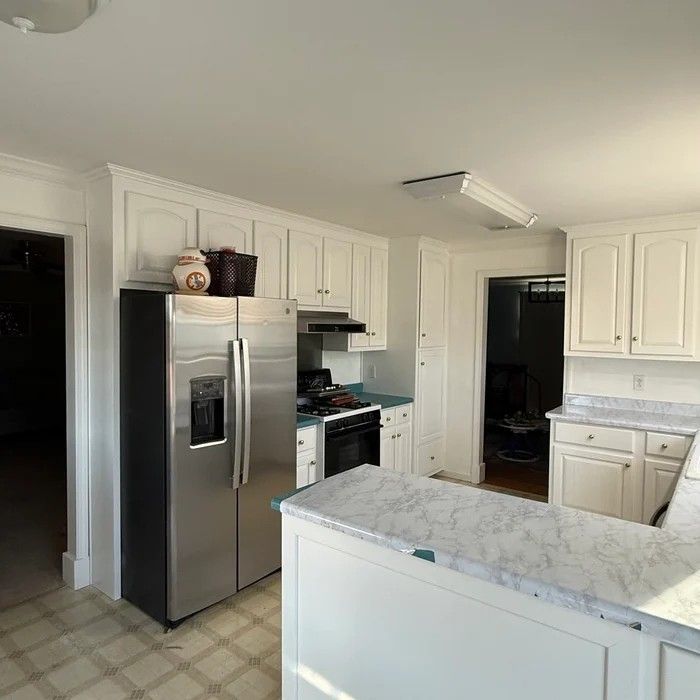
Kitchens That Support Daily Use
Kitchen Remodeling in Marietta for homes needing improved workflow and modernized layouts
Kitchens with isolated cooking areas separated from dining or living spaces create workflow bottlenecks during meal preparation, while outdated cabinetry layouts leave corner spaces unused and countertop zones too narrow for multiple tasks. Leon Home Renovation handles kitchen remodeling in Marietta, Alpharetta, Woodstock, and surrounding areas by reconfiguring layouts to open sightlines, adjusting framing to accommodate wider doorways or pass-throughs, installing drywall and trim that integrate seamlessly with new structural changes, updating flooring for durability under heavy foot traffic, and applying finish paint that complements cabinetry and countertop selections. These projects prioritize how the kitchen functions during everyday use, not just how it appears in photos.
The process begins with removing non-structural walls or sections of walls to connect the kitchen with adjacent living areas, creating open-concept layouts that allow conversation and supervision of other rooms during cooking. Framing adjustments support new openings, and drywall finishing smooths transitions between old and new surfaces. Flooring updates often extend from the kitchen into connected spaces to maintain visual continuity, using materials that resist moisture, scratching, and impact from dropped items.
Request a planning session to review layout modifications and material choices for your kitchen remodeling project.

What You Notice Once Kitchen Remodeling Is Finished
Remodeling involves evaluating load-bearing structures to determine which walls can be removed or altered, assessing plumbing and electrical locations to ensure new layouts accommodate sinks, appliances, and lighting without costly relocations, and planning material transitions so flooring, trim, and paint align visually with adjacent spaces.
Once complete, you move freely between cooking, dining, and living areas without navigating through doorways or around protruding walls. Natural light from windows in one room reaches deeper into the kitchen, reducing reliance on artificial lighting during the day. Countertop zones are positioned to support meal prep, plating, and cleanup in sequence without backtracking. Flooring withstands spills, dropped utensils, and repeated foot traffic without showing wear patterns or surface damage within the first few years.
Kitchen remodeling also includes trim installation that frames cabinets, windows, and doorways with consistent profiles, and paint application that ties together walls, ceilings, and trim in a cohesive color scheme. These finishing details ensure that structural changes result in a polished, intentional appearance rather than a patchwork of updates.
What Property Owners Usually Ask
Homeowners planning kitchen updates often have questions about layout feasibility, project phases, and material performance.
What determines whether a wall can be removed during kitchen remodeling?
Walls are evaluated for load-bearing function by examining their position relative to the home's foundation, floor joists, and roof structure. Non-load-bearing walls can be removed entirely, while load-bearing walls require beam installation to transfer weight before removal.
How does flooring selection affect kitchen functionality?
Flooring must resist moisture from spills, withstand impacts from dropped cookware, and provide a surface that cleans easily without trapping debris in grout lines or texture. Luxury vinyl, tile, and hardwood each offer different trade-offs in durability, comfort underfoot, and maintenance requirements.
When should paint be applied during a kitchen remodel?
Painting is completed after drywall, framing, and trim installation but before cabinets and appliances are placed. This timing prevents paint splatter on finished cabinetry and allows trim to be primed and painted in place for a factory-like finish.
Why do open-concept kitchens require different lighting than enclosed layouts?
Open layouts lose the concentrated lighting provided by smaller, enclosed spaces. Additional lighting zones are needed for task areas, ambient lighting to fill larger volumes, and accent lighting to define visual boundaries between kitchen and living areas.
What should I expect in terms of kitchen access during remodeling?
Kitchen access is limited during active construction phases involving drywall, flooring, or structural changes. Planning temporary cooking and cleanup stations in other areas maintains household function while work progresses.
Leon Home Renovation customizes kitchen remodeling plans around how you use the space, your storage needs, and the structural realities of your home. Schedule a consultation to discuss layout options and finish selections that improve both function and appearance.